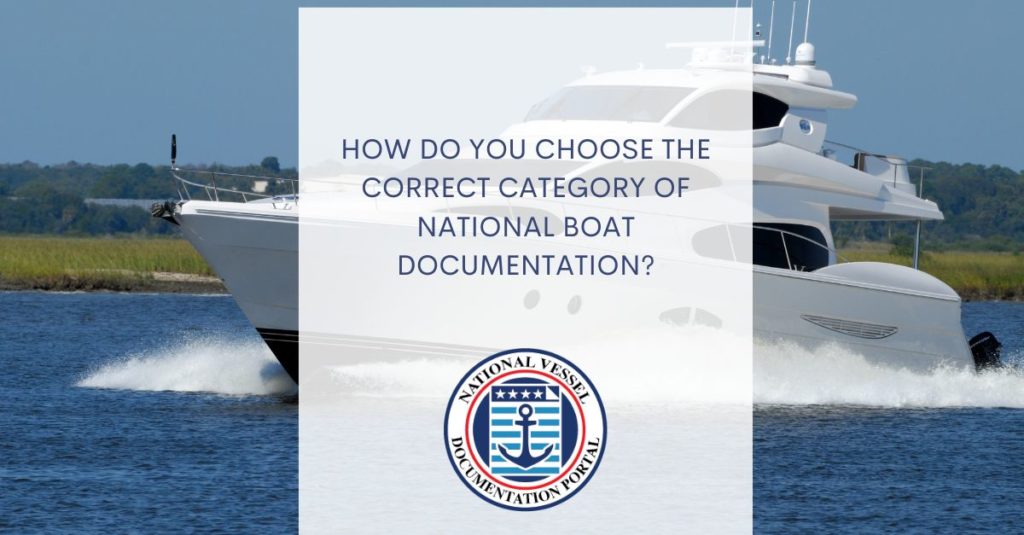
Federal boat documentation serves as an official form of national registration administered through the United States Coast Guard. However, not every vessel qualifies, and not every qualified vessel belongs in the same documentation category.
The category you choose affects how your vessel is recognized, how it may legally operate, and what requirements apply to ownership and maintenance of records. Many vessel owners are familiar with state registration but may not fully understand how federal documentation works or which endorsement best matches their vessel’s intended use.
What basic eligibility criteria are mandatory for federal boat documentation?
Before selecting a documentation category, vessel owners must first determine whether their vessel qualifies for federal documentation.
The Coast Guard establishes specific eligibility requirements that must be met before a vessel can receive documentation.
Generally, the vessel must:
- Be wholly owned by a United States citizen
- Measure at least five net tons
- Meet all applicable federal ownership requirements
- Be eligible for the endorsement requested on the application
Many owners mistakenly assume that vessel length determines eligibility. In reality, federal qualification is based on net tonnage, which measures internal volume rather than overall length.
Numerous recreational vessels exceed the five-net-ton threshold even when they appear modest in size. Because of this, many pleasure craft owners discover that their vessels qualify for federal documentation even though they previously believed only large commercial vessels could participate.
When filing for boat documentation, confirming eligibility before submitting an application helps ensure that the documentation process proceeds smoothly.
How federal documentation differs from state registration
Federal documentation and state registration serve different purposes.
State registration is administered by individual states, while Coast Guard documentation establishes a vessel’s nationality and federal status.
Depending on state laws, documented vessels may still be subject to certain state requirements. However, documentation itself provides a nationally recognized record of ownership and vessel identity.
Federal documentation often appeals to owners because:
- Vessel records are maintained at the federal level
- Documentation establishes national vessel identification
- Certain commercial operations require documentation
- Financing institutions frequently prefer documented vessels
- Ownership transfers can be supported by federal records
How boat documentation categories affect vessel operations
The endorsement attached to a documented vessel is not merely an administrative designation. It identifies the type of activity the vessel is authorized to conduct under federal regulations.
Selecting the wrong endorsement can create complications regarding compliance and vessel operations.
When evaluating documentation options, owners should carefully consider:
- Whether the vessel is used strictly for recreation
- Whether commercial fishing activities occur
- Whether passengers are transported for compensation
- Whether cargo transportation is involved
- Whether international trade is anticipated
The endorsement selected should accurately reflect the vessel’s intended purpose.
How do you choose between different vessel operational endorsements?
One of the most important decisions in the documentation process involves selecting the proper endorsement.
Several endorsements are available depending on vessel use.
Recreational Endorsement
A Recreational Endorsement is intended for vessels used exclusively for pleasure purposes.
Common examples include:
- Family cruising vessels
- Personal yachts
- Weekend boating vessels
- Recreational fishing boats that do not engage in commercial activity
This endorsement is often the most common category selected by private vessel owners.
Fishery Endorsement
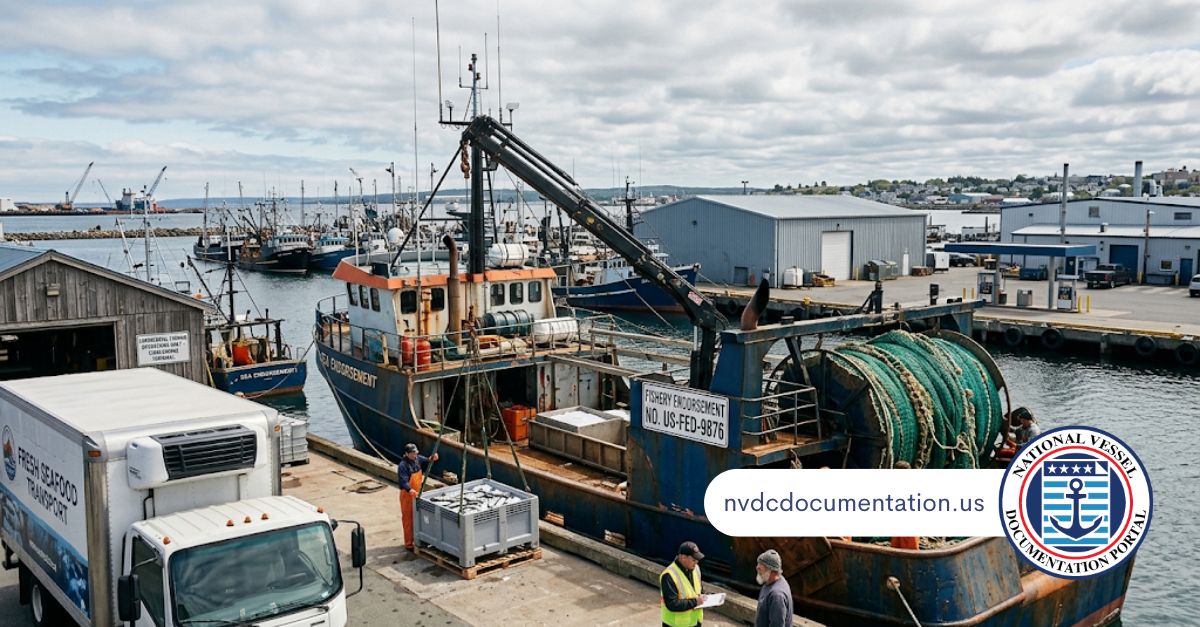
The Fishery Endorsement applies to vessels participating in commercial fishing activities.
Depending on applicable regulations, vessels operating under this endorsement may engage in:
- Commercial harvesting
- Commercial fishing operations
- Transportation of fishery-related products
Eligibility requirements for fishery operations can be extensive, making it important for owners to ensure that the vessel qualifies before filing.
Coastwise Endorsement
The Coastwise Endorsement generally applies to vessels involved in domestic trade activities.
Such operations may include:
- Transporting passengers for compensation
- Carrying cargo between U.S. ports
- Certain commercial maritime activities
Because federal laws regulate coastwise trade, vessels operating under this endorsement must satisfy applicable requirements.
Registry Endorsement
Registry Endorsements are commonly associated with vessels involved in foreign trade.
This endorsement may be appropriate when a vessel participates in activities that extend beyond domestic commercial transportation.
Choosing the correct endorsement helps ensure that a vessel’s documentation accurately reflects its intended use.
Why do marine lenders require official Coast Guard documentation over state titles?
Financing often plays a major role in vessel ownership, particularly for larger boats and yachts.
Many lenders prefer documented vessels because federal documentation provides legal mechanisms that are unavailable through many state title systems.
One significant advantage involves the ability to record a Preferred Ship Mortgage.
Financial institutions frequently rely on this federal mortgage structure because it provides stronger protections than many state-level lien systems.
Benefits from a lender’s perspective include:
- Public federal recording of mortgage interests
- Clear documentation history
- Established procedures for recording claims
- Greater legal priority in many circumstances
As a result, many lenders require documentation before financing certain vessels.
The federal recordkeeping structure can help create confidence for both lenders and borrowers during vessel transactions.
Ownership records and supporting documentation
Ownership verification is a critical part of the documentation process.
When applying for documentation, owners must provide records that establish a valid ownership chain.
Depending on the transaction, required materials may vary.
For example, a boat bill of sale may be necessary when ownership has recently changed. Ownership documents help establish legal transfer rights and provide supporting evidence during the application process.
Accurate ownership records help prevent delays and improve application processing efficiency.
Owners should carefully review all submitted information before filing documentation paperwork.
Maintaining federal records throughout vessel ownership
Documentation responsibilities do not end once a Certificate of Documentation is issued.
Owners must maintain current records and submit updates when necessary.
Situations that may require action include:
- Ownership changes
- Name changes
- Address updates
- Mortgage filings
- Vessel transfers
- Documentation expiration
Many owners eventually need documentation renewal services to keep federal records active and current.
Maintaining accurate records helps preserve compliance and ensures that vessel information remains properly reflected within federal databases. The right boat documentation choice begins with figuring out your vessel’s intended use and selecting the endorsement that aligns with those activities.
What information can be found through federal vessel history records?
Federal documentation records can provide valuable information regarding a vessel’s ownership and filing history.
Certain documentation services allow access to historical information maintained within official records.
One commonly requested record is an Abstract of Title.
This document may contain information relating to:
- Historical ownership records
- Recorded mortgages
- Satisfied mortgages
- Liens appearing in federal records
- Other documented transactions affecting the vessel
These records are frequently reviewed during ownership transfers and financing activities.
They can provide valuable insight into a vessel’s documented history.
When is a certified ownership document needed?
Certain transactions require official documentation copies rather than informal records.
In these situations, owners may request a Certified Copy of Coast Guard documentation records.
Certified documentation may be useful when:
- Verifying ownership information
- Supporting legal transactions
- Completing financing requirements
- Satisfying administrative requests
- Providing official documentation records
Because certified records originate from official documentation files, they are often accepted when formal proof is required.
Using an online portal to submit documentation applications
Many vessel owners prefer online filing because it simplifies the submission process. Whether applying for the first time or updating existing records, choosing the appropriate boat documentation category is a foundational step in maintaining accurate federal vessel records.
Rather than navigating complex paperwork independently, applicants can use an online portal designed specifically for documentation-related filings.
At the National Vessel Documentation Portal, we provide a secure online system that allows vessel owners to submit documentation applications electronically.
Our portal supports various documentation services, including:
- Initial documentation filings
- Renewal submissions
- Documentation replacements
- Ownership-related filings
- Documentation updates
- Requests for documentation records
Having access to a centralized online filing platform can make the application process more convenient while helping applicants submit the information required for their selected service.
Selecting the documentation category that matches your vessel
The correct boat documentation category depends on how a vessel will actually be used. Eligibility requirements, operational activities, financing considerations, and ownership objectives all play a role in determining which endorsement is appropriate.
Before filing, vessel owners should evaluate:
- The vessel’s intended operations
- Commercial versus recreational use
- Ownership qualifications
- Financing requirements
- Documentation eligibility standards
- Applicable endorsement categories
Through our online portal, we provide access to the services vessel owners need to submit applications, maintain documentation records, and manage their federal vessel documentation requirements efficiently.
